
Animal welfare on Tromsø husky tours
Working sled dogs are not pets, and a good kennel is not a petting zoo. Here is how to tell a good operation when you visit one.
The short answer
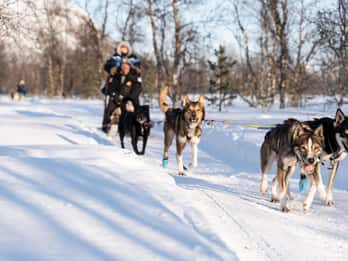
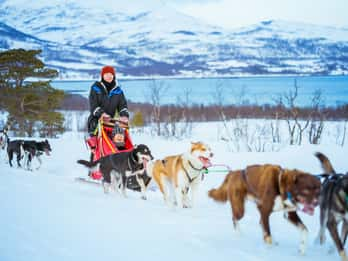
The established Tromsø operations are year-round working kennels, and most reviews describe well-cared-for dogs, often written by visitors who arrived sceptical. Tromsø Villmarkssenter, for example, keeps around 200 huskies and grew out of Iditarod racing history. The clearest welfare signal is the harness moment: dogs that howl with excitement and lean into the lines, handled by mushers who know every animal by name. Tethering on chains is common at working kennels and shocks some visitors, so look at the exercise, space and contact the dogs get around it.

See which husky tours still have places on your dates
Whether dog sledding is ethical is a fair question, and the answer starts with what these operations are: year-round working kennels, not seasonal tourist props. Alaskan huskies are bred to run and visibly want to: at a good kennel you see it in dogs that howl with excitement at harness time. The established Tromsø operations fit that picture: Tromsø Villmarkssenter keeps around 200 huskies and grew out of competitive Iditarod racing history, and the other kennels in our comparison are working operations of 130 dogs and more. That does not put every practice beyond question. This page covers what to look for and includes the critical review voices, not just the glowing ones.
What good welfare looks like when you visit
- Dogs that want to run. The single clearest signal: teams that erupt in excitement at harness time and lean into the lines. Reluctant, cowering or listless dogs are the opposite signal.
- Mushers who know every animal. At good kennels the guides talk about individual dogs: names, quirks, who runs with whom and why. That knowledge is what daily care looks like from the outside.
- Clean, maintained enclosures and dogs in visible physical condition: coat, weight, movement.
- Open doors. Operations confident in their standards build kennel time into every tour and let you see the whole camp, not a staged corner.
- A year-round story. Ask what the dogs do in summer. A real working kennel has an answer, because the dogs live there in July too.
The criticism you should read before booking
Most reviews of the Tromsø kennels describe well-cared-for dogs, but not all, and we would rather you read the exception here than discover it upset on site. One visitor to a camp evening was shocked to find dogs tethered on chains outside the tour hours. Two things are true at once about that. First: tethering is common practice at working sled-dog kennels (including long-established, racing-heritage operations) and a visitor whose reference point is a family pet on a sofa will find a working kennel jarring regardless of its standards. Second: being common practice does not put the question beyond debate, and how much space, exercise and social contact the dogs get around it is exactly the right thing to look at. Our approach: we name it, we do not wave it away, and we prefer operators whose visible day-to-day (eager dogs, informed mushers, open camps) holds up to the look.
What reviewers actually report
Across the tours in our comparison, the welfare signal in reviews is strongly positive, and notably it often comes from visitors who arrived sceptical: one t193904 reviewer wrote she “felt bad about booking the excursion” until she saw how the animals were kept; visitors to the Moa Hundseid family kennel describe dogs “in great shape, happy to run” and owners who visibly “care for and love their dogs”. The cards below show those voices next to the critical one. All of them are real, and none has been rewritten.
What you can do as a guest
Book kennels with a visible welfare focus; the operations in our comparison are established working kennels, and we favour the ones that show their whole camp. Watch the harness moment, which tells you more in ten seconds than any brochure paragraph. Ask your musher questions: good kennels enjoy them, and evasiveness is information too.
Afterwards, say what you saw in your own review. Reviews are the closest thing this industry has to a welfare audit, and the critical review on this page is the reason this page discusses tethering at all.
Welfare in the reviews, the critical one included
Three real voices: two visitors who looked closely and came away reassured, and one who was shocked by tethering at a camp. Tethering is common practice at working sled-dog kennels. That is context, not a dismissal; the full discussion is in the text above.
“… At first, I felt bad about booking the excursion, but when I saw how well the animals are cared for, I realised … they are clearly full of affection and love. The minibus … was new, and all the facilities were pleasant and of a high standard …”
“The owners are very friendly … You can tell that they care for and love their dogs, prioritizing an experience where both visitors and dogs have a great time …”
“… I was shocked by the living conditions of the dogs, chained to a 2-meter chain … This tour is very expensive and is clearly not worth the price.”
Reviews by travellers after their husky tour, from GetYourGuide.
FAQ
Is dog sledding in Tromsø cruel?
The established Tromsø operations are year-round working kennels running dogs that are bred for exactly this and visibly eager to do it. Reviewers who arrive sceptical regularly say the camp visit reassured them. That is not a blanket clearance: standards vary worldwide, which is why we describe what good welfare looks like on site and favour operators with a visible welfare focus.
Why are sled dogs kept on chains?
Tethering is common practice at working sled-dog kennels, including long-established racing operations. It is not by itself evidence of a bad kennel, though it shocks visitors who expect pet-dog conditions. What matters around it is what you can observe: daily exercise, social contact, body condition and dogs that clearly want to run.
How can I tell a good kennel during my tour?
Watch the harness moment: eager, excited dogs are the clearest welfare signal there is. Beyond that: mushers who know every dog by name, clean enclosures, dogs in visible good condition, and a camp you are free to see rather than a staged corner.
Do the operators on this site have a welfare focus?
The kennels in our comparison are working sled-dog operations, from the ~200-dog Villmarkssenter with its Iditarod history to the family-run Moa Hundseid kennel whose reviewers consistently praise the dogs' condition. We show critical reviews where they exist and prefer operators whose camps hold up to a close look.
Should I skip the tour if I have doubts?
Visit first, judge on site: kennel time is built into every tour, and the camps are open to exactly the scrutiny this page describes. If what you see falls short of what we describe here, say so in your review; that feedback loop is the strongest welfare pressure this industry has.